Home›EICR codes›C2 no RCD protection
No RCD protection on your EICR
This is the single most common reason a London rental fails its electrical inspection. It is also one of the most predictable to fix, and one of the easiest to be overcharged for.
What the observation actually means
An RCD is the device that cuts the supply within milliseconds when current starts flowing somewhere it shouldn't, usually through a person. Current wiring standards expect that protection on socket circuits, on cables buried in walls, and on circuits serving anything outdoors.
If your board is an older split-load unit, a rewirable fuse box, or a plastic unit with no RCD at all, your inspector will record a C2 against the affected circuits. C2 means not dangerous at this moment, but it will become dangerous. Any C2 anywhere in the observations makes the whole report unsatisfactory.
If this is a rented property in England: the remedial work must be completed within 28 days of the inspection, or sooner if the report specifies. You cannot start a new tenancy while the C2 is outstanding, and penalties run to £30,000 per breach.
Why the fix is almost always a new board
Landlords often ask whether an RCD can just be added to the existing unit. Occasionally it can. Far more often it cannot, for reasons that have nothing to do with anyone trying to sell you something:
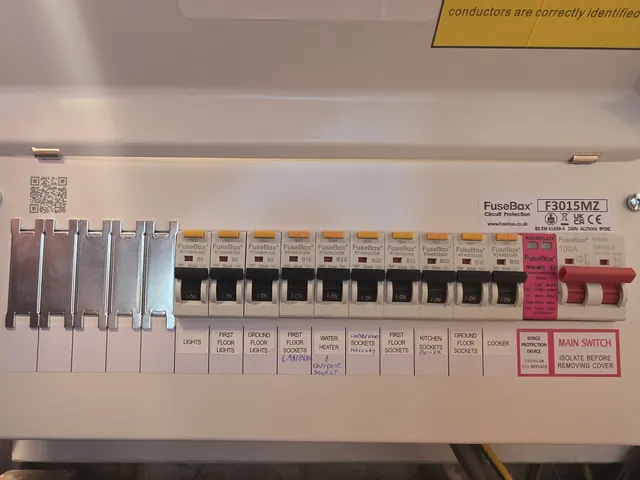
- Older enclosures were never designed to take the devices, and the manufacturer's parts have long since been discontinued. Fitting another brand's device into someone else's board is not compliant.
- Plastic enclosures in flats and in shared escape routes have their own problem. Current standards expect a non-combustible enclosure in domestic premises.
- Once you open an old board you frequently find the earthing arrangement, the main switch or the bonding needs attention too, and you end up doing the work twice.
A replacement consumer unit with individual RCBOs on each circuit resolves the C2, and it usually clears two or three other observations on the same report at no extra cost. That is the part nobody explains: the board change is often cheaper than fixing the observations separately.
What it costs in London
Priced by the size of the board, including all devices, labour, full testing, and a fresh Electrical Installation Condition Report marked satisfactory and valid five years.
You need a new fuse boardinc VAT
Count the switches on your existing one.
A second board at the same address is £150 less. Two boards is £695 + £545 = £1,240 in one visit, and it is a tick when you book.
Individual circuit protection is an optional extra, £150, £300 or £450 by board size. No call-out charge on a board job.
You don't need a boardinc VAT
Everything else your report flagged.
That covers the visit, testing and the certificate. You then pay only for the items your report actually lists, priced in the next box.
The items themselvesinc VAT
The same price with or without a board.
On a board job the board already covers the attending, so there is no visit fee on top.
Every price includes VAT, materials, labour, full testing, a fresh satisfactory condition report and the completion pack.
That is the price, not a starting point. Only two things move it: an earthing arrangement that must be upgraded first, or a supply where the network operator has to attend. Both agreed in writing before we start.
What you get when the work is done
You should end up holding three things. A fresh Electrical Installation Condition Report for the property, marked satisfactory. Written confirmation that the observations on the original report have been addressed. And, for a rented property, a copy of both to give your tenant, with the council entitled to ask for them within seven days.
You do not normally need a whole new EICR. Written confirmation from whoever did the remedial work is what resolves the report. We issue that as a completion pack, with the observation schedule, the certificate, the signed confirmation and your tenant and council letters already drafted.
Getting a second price is normal
The firm that inspected your property is entitled to quote for the remedial work, and plenty do a fair job of it. But the regulations ask for a qualified and competent person, not a particular company, so you are free to go elsewhere. If you want a price from someone with no involvement in how your report was coded, that is what we do.
Find out if you really need a new board
No RCD protection is one of the easiest codes to be overcharged for. Send the report for a fixed written price within 60 minutes, and we tell you which observations you are not legally required to fix.
Related
Every EICR code explained
C1, C2, C3 and FI, and which of them actually make your report fail.
C1: danger present
What a C1 means, what should happen on the day, and how fast to act.
FI: further investigation
An unanswered question on your report, and how it gets answered.
Bonding to gas and water
Missing or undersized main bonding, and the quick fix.
Earthing upgrades
The main earth and the meter tails, and why they can come first.
Managing a portfolio?
Inspections and remedials on one account, one invoice, evidence filed per property.